


Vermilion Parish Rice Farmers Explore Microalgae as “Weird but Promising” Crop
March 16, 2026
In the heart of Cajun country, Allen Mclain farms about 3,000 acres of rice together with his wife, father, and two younger brothers. Much of their crop, all south of LA-14, is under threat. Saltwater from the Gulf is slowly, and some days quickly, making its way up through marshes, bayous, and over levees.
But Mclain has found two new allies: microalgae and LSU researcher Naohiro Kato. While most Louisiana farmers sell their rice for under $1 per pound, a single pound of fucoxanthinol for medical use—produced from farmed microalgae—could fetch around $1 million.
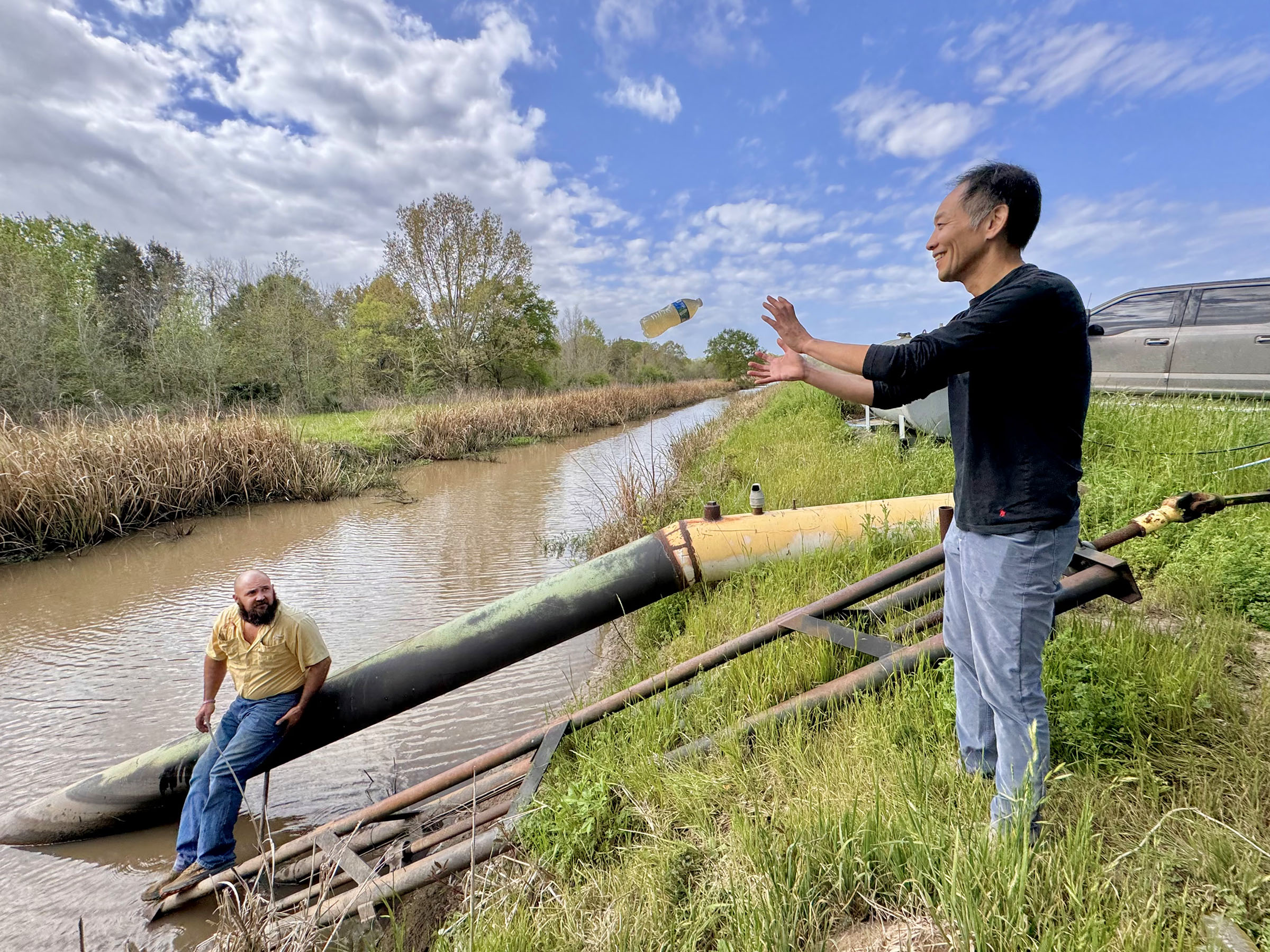
After testing the water on Allen Mclain’s farm, LSU researcher Naohiro Kato is working to isolate local strains of microalgae that could be farmed at a grand scale alongside rice. “We constantly have land lost to salt, while microalgae like salt and could help us rice farmers make it to the next season,” Mclain said.
“Salt is killing Louisiana rice,” Mclain said. “If the salt level is too high, we lose our entire crop, and that’s an issue we’re seeing more and more. A lot of us try to supplement rice with crawfish, but crawfish don’t survive in saltwater well either, so it’s not like we can jump back and forth. Some of us will do rice and ducks, and some people try to do all three, but there’s not a lot else we can do to diversify. If you plant a crop of sugar cane, for example, you can’t go back to rice. Once you destroy the levees and zero-grade fields, you can’t reclaim it all. It’s not feasible.”
Mclain is wholly committed to preserving the Cajun landscape, the wetlands, and the lives and lifestyle they afford.
“I'm not a conservationist, but in some sense, I am,” Mclain said. “If you jump to a different commodity because you see it as more profitable, you’re changing an ecosystem we’ve known for hundreds of years. Then you’re changing the bird patterns, you're changing the fish habits, you're doing a lot of things that can hurt the whole geographic area. Meanwhile, rice farming helps sustain shorebirds, ducks, water management, and water quality.”
When LSU researcher Naohiro Kato, associate professor of biological sciences, drove down to Abbeville to visit Mclain, he planted an unconventional idea: Supplement his family’s income from rice by also growing microalgae, which thrives in saltwater.
“At first, I thought, ‘Man, this is weird!’ Down here, you wouldn’t think of growing algae in rice fields, not on a large scale,” Mclain said. “But it’s not a whimsical thing. It’s very realistic, and I think algae is going to be a huge benefit, not just locally, but a huge boost in the economy for the different things you can do with it.”
The uses for microalgae are indeed many. Kato’s research and patent for methods to make algae-based bioplastics has already, and somewhat famously, produced biodegradable Mardi Gras beads. He’s also researching a bright red compound derived from microalgae, fucoxanthinol, as a potential treatment for asthma (with Stephania Cormier, professor of biological sciences at LSU with a joint appointment at Pennington Biomedical) and obesity (with Dr. Frank Greenway, professor and chief medical officer for Pennington Biomedical’s Clinical Trials Unit). In addition, microalgae can be used to make omega-3 supplements and biofuels—all valuable products.
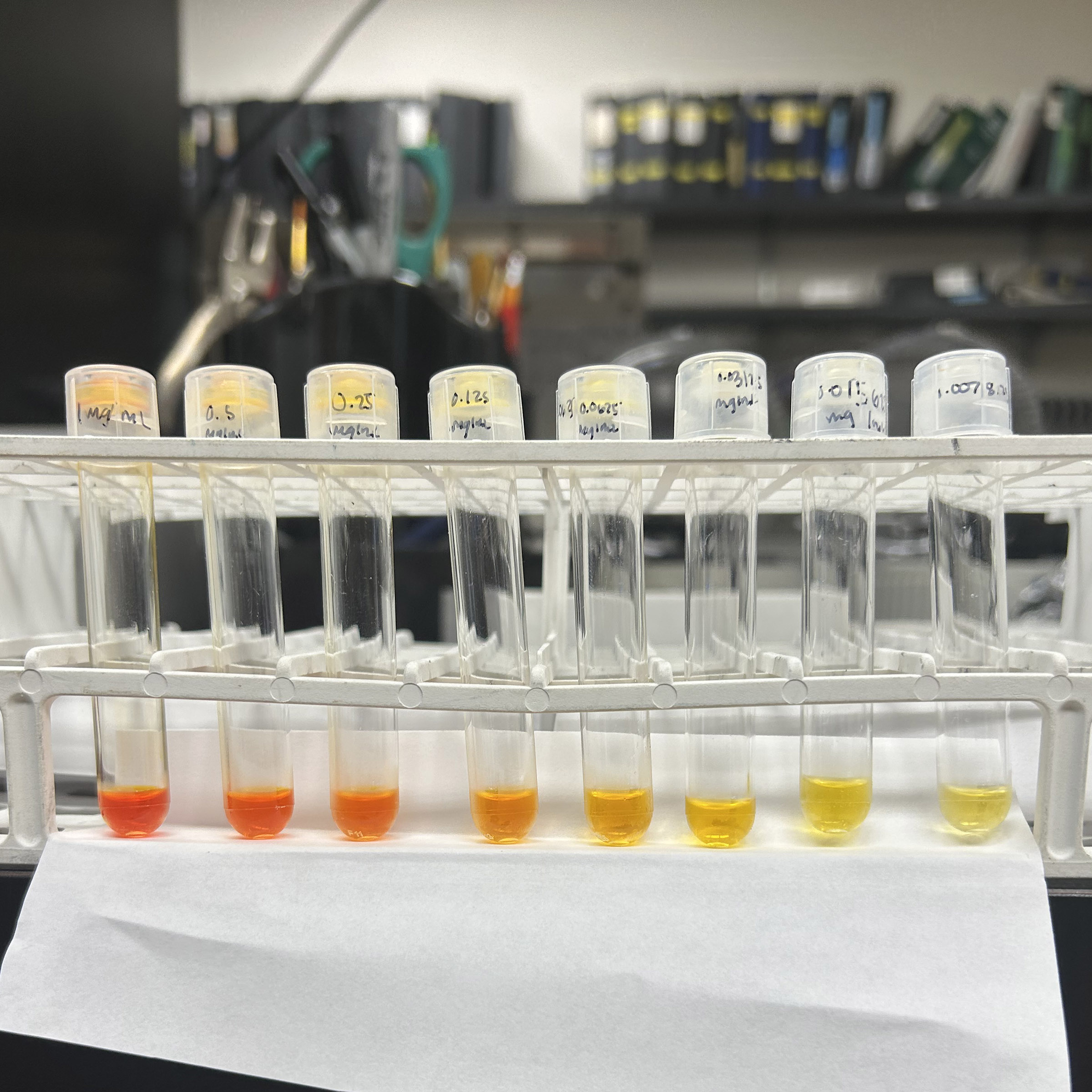
Using fluorescence microscopy at LSU’s AMAC core research facility, Kato and his team study local strains of Louisiana microalgae and extract fucoxanthinol, which is highly valuable and has many potential medical applications.
There are already successful microalgae farms in states like Hawaii, California, New Mexico, and Texas, but not yet in Louisiana. Mclain is willing to go first with support from LSU.
“You don’t even want me to start adding up everything my wife and I do to make it through each season,” Mclain said. “We started growing different aspects of our crawfish production. We do on-site catering now, with a trailer where we do private parties and events. We started selling our own crawfish directly. Then we needed ice to fill the trucks, so we put up a huge machine and now sell ice for crawfish, shrimp boats—we move ice year-round. It keeps us busy and keeps us moving when times get tough.”
Mclain’s diversification efforts are not unusual among Louisiana’s rice farmers.
“Rice yields are down, and rice prices are as low as they’ve been in 30 years,” Mclain said. “Rice farmers are struggling very much right now while our input costs are four times higher. Other crops are suffering, too, but nothing like we are. We’re just trying to stay afloat, and algae could give us another option to be more diversified in agriculture.”
It was Jeremy Hebert, LSU AgCenter extension agent and agronomist for the Acadia, Vermilion, Lafayette, St. Martin, and Iberia parishes, who connected Mclain and Kato.
“During the drought of 2023, I ended up doing some saltwater monitoring for farmers in Vermilion Parish. The drought caused many canals that farmers pump from for rice and crawfish production to become salty enough to have an immediate impact,” Hebert said. “Allen Mclain and I formed a close working relationship, and when Dr. Kato reached out to work with a farmer who was battling saltwater issues, Allen was the first person I thought of. I gave him a call, and he was all in.”
To survive, rice farmers in Louisiana must diversify in one way or another, according to Hebert.
“Rice margins are the tightest I can ever recall in my tenure with the LSU AgCenter,” Hebert said. “These days, rice farming alone just doesn’t cut it. Hopefully, this project works out so algae farming becomes an option for farmers in south Louisiana. Right now, there are few options left.”
Jeremy Hebert, LSU AgCenter extension agent and agronomist for the Acadia, Vermilion, Lafayette, St. Martin, and Iberia parishes
One of those options could be fucoxanthinol-producing microalgae.
“I don’t even try to pronounce it,” Mclain said. “But to produce it, we can use less fertilizer and zero pesticides and there wouldn’t be any waste.”
The microalgae biomass left over after extracting fucoxanthinol could be used to make biofuels or biodegradable plastics, such as for Mardi Gras beads, which remains a pet project for Kato.
“Based on my calculation, we’d only need about 30 acres to grow enough microalgae to replace all of the plastic beads thrown at Mardi Gras in New Orleans,” Kato said. “But biodegradable Mardi Gras beads are more expensive than regular plastic, so no one wants to buy.”
Kato has a solution for this problem.
“If we make enough money with medical applications, we can still do the Mardi Gras beads and use our fight against plastic pollution as a selling point and advertisement for our medical products,” Kato said. “Win-win!”
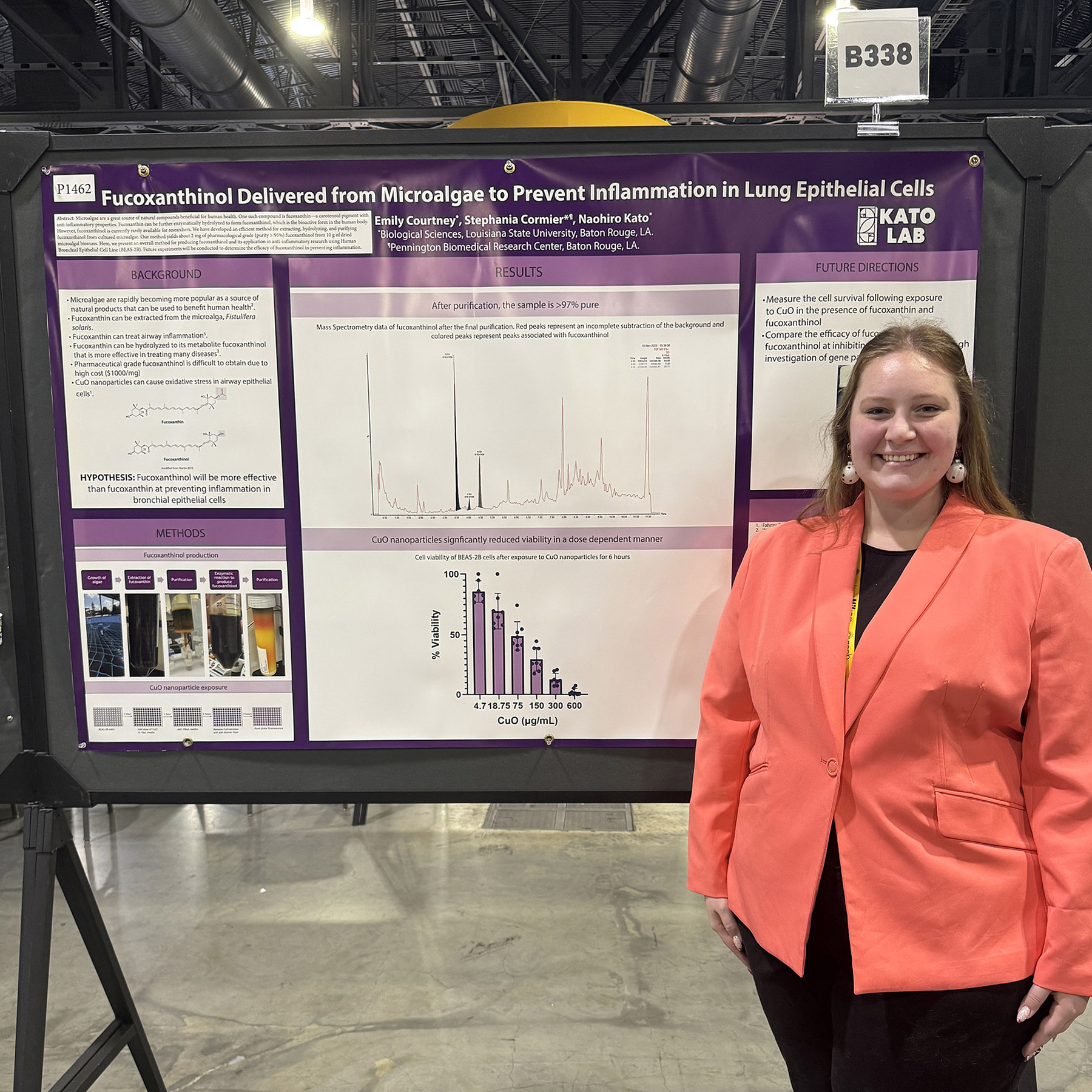
Emily Courtney from Central, Louisiana, is a PhD student in Kato’s lab who is researching the effects of fucoxanthinol, sourced from microalgae, on lung health. “I extract an anti-inflammatory compound from microalgae and then purify and hydrolyze this compound to make it more effective,” she said.
While most Louisiana farmers sell their rice at under $1 per pound, a single pound of fucoxanthinol for medical use could fetch about $1 million, estimates Kato.
Dr. Greenway at Pennington Biomedical sees fucoxanthinol as a potentially powerful complement to GLP-1 drugs like Ozempic for weight loss.
“If fucoxanthinol does cause weight loss and increase fat burning and metabolic rate, it could be a unique treatment for obesity that could be combined with any of the other obesity medications on the market,” Dr. Greenway said. “All the FDA-approved medication for the treatment of obesity work by decreasing food intake, while fucoxanthinol could increase metabolic rate to metabolize the fat stores faster.”
Medications that decrease appetite tend to lower the metabolic rate, while fucoxanthinol could correct this physiologic, and for some vexing, adaptation to weight loss.
“We’re looking at an initial clinical trial for obesity, but fucoxanthinol has the potential to be a treatment for several medical problems,” Dr. Greenway said. “It has already been shown to have anti-cancer activity in breast, colon, leukemia, and bone cancer cells. It has been shown to reduce the inflammation that occurs in Alzheimer’s and Parkinson’s diseases. It also helps the liver by reducing the scar tissue that builds up in cirrhosis and makes the body more sensitive to insulin, suggesting it also could be a good treatment for diabetes.”
Despite the challenges he and his family have as rice farmers, Mclain remains committed to growing rice.
“Where would you get your food otherwise?” Mclain asked rhetorically. “Should we import all of our rice, or do you want to know, hey, this is grown here in America, here in Louisiana where we grow enough food to supply the entire country? In my eyes, we make this sacrifice to be able to know that we do feed our families and we do feed the world.”